Why Urban Planning is Crucial for Pakistan’s Future

Why Urban Planning is Crucial for Pakistan’s Future

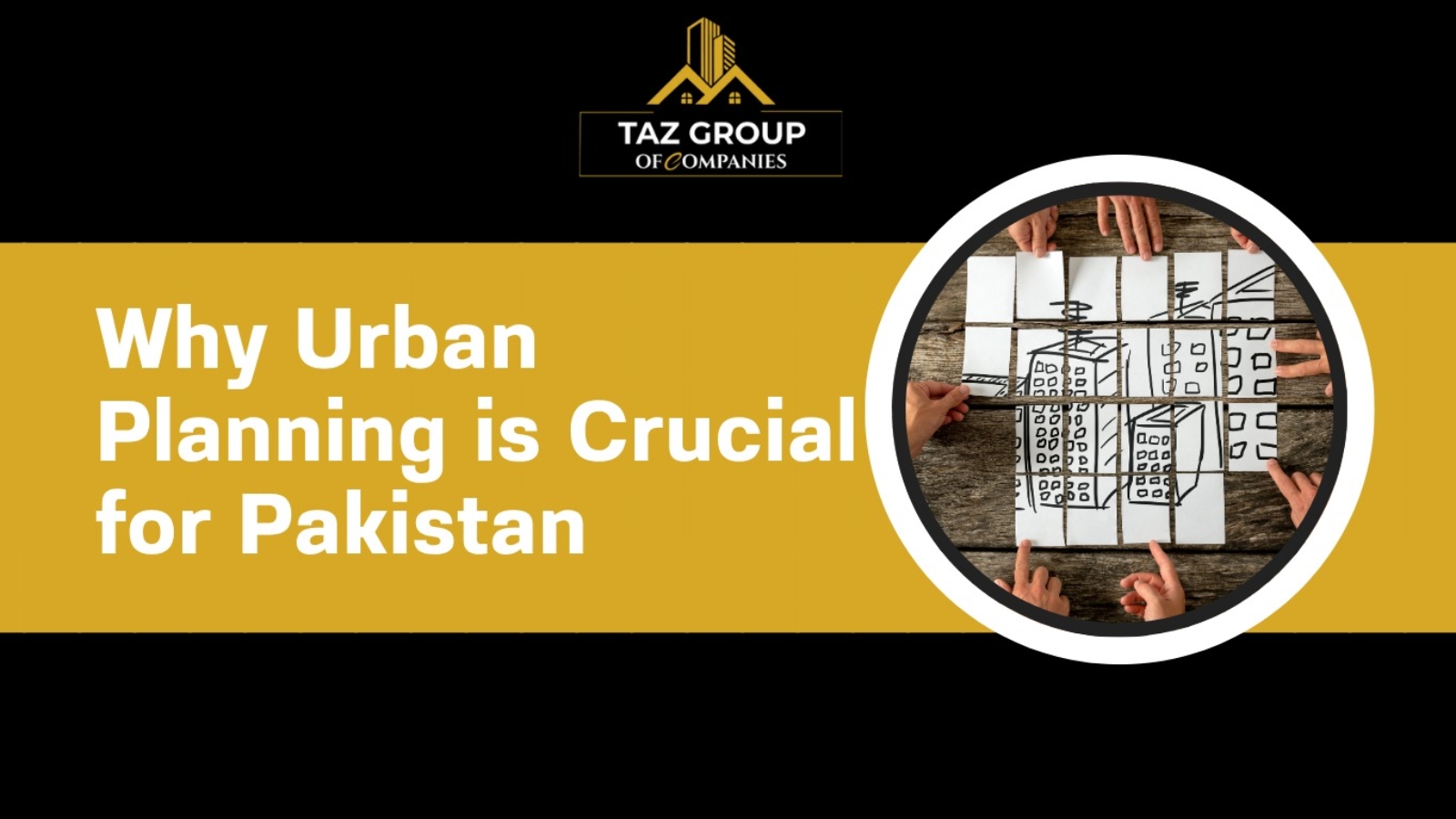
Pakistan’s major cities are undergoing rapid urbanization, bringing unprecedented opportunities alongside serious challenges. Housing shortages, overburdened transportation systems, deteriorating infrastructure and economic disparities are the reasons that the pace of growth has outstripped the ability of many cities to manage it effectively. This is where urban planning steps in as a critical tool to ensure that Pakistan’s cities grow in a sustainable, equitable, and resilient manner.

Understanding Urban Planning

Urban planning is the strategic process of designing and organizing land use, infrastructure, and services in urban areas to meet the present and future needs of residents. It integrates considerations across housing, transportation, economic development, public spaces, and environmental sustainability. Well executed urban planning ensures efficient land utilization, supports population growth, and enhances the quality of life for all citizens.

The Current Challenges of Urbanization in Pakistan

The rapid pace of urbanization in Pakistan has led to:

  • Affordable and accessible housing is increasingly scarce, forcing many into informal settlements.
  • Overcrowded neighborhoods and insufficient sanitation contribute to public health crises.
  • Traffic congestion and inefficient public transit systems make commuting difficult and time consuming.
  • Unregulated urban sprawl consumes valuable agricultural land and disrupts ecosystems.
  • Growing populations strain existing educational infrastructure, limiting access to quality education.
  • Flooding, heat waves, and water scarcity threaten many urban centers.
  • Bureaucratic inefficiencies, corruption, and fragmented authority often delay or derail urban development projects.

Without a proactive urban planning framework, these challenges will only intensify, compromising the economic and social stability of Pakistan’s cities.

Also read: How Much You’ll Really Save on Property Deals After FED TAX Removal

The Core Pillars of Effective Urban Planning

For urban planning to succeed, it must be built on several core principles:

  1. Comprehensive Regulation and Control:
    Clear and enforceable development regulations that involve stakeholder consultation ensure sustainable growth.
  2. Transparent and Agile Governance:
    Strong municipal institutions with clear mandates enable efficient implementation of policies.
  3. Institutional Capacity Building:
    Continuous training and support for city planners, engineers, and public officials improve planning capabilities.
  4. Visionary Leadership:
    Long term planning must be driven by leaders who prioritize quality of life, economic prosperity, and environmental stewardship.
  5. Integrated Planning:
    Coordination across sectors such as transport, housing, healthcare, and education ensures holistic development.

The Economic Imperative

Pakistan’s urban centers contribute approximately 55% of the nation’s GDP. However, unregulated growth undermines this economic potential. Unchecked expansion often results in unregulated housing societies on city outskirts, straining infrastructure and creating service delivery challenges.

Effective urban planning can channel this growth more productively by:

  • Encouraging formal real estate development with proper zoning.
  • Supporting business hubs with robust infrastructure.
  • Attracting both domestic and foreign investment through stable and predictable growth frameworks.
  • Reducing reconstruction costs by preventing infrastructure decay.

A well-managed urban economy fosters job creation, entrepreneurship, and innovation while minimizing resource wastage.

The Role of Collaboration

Urban planning requires the collective effort of multiple stakeholders:

  • Government Authorities: Establish policies, provide funding, and enforce regulations.
  • Private Sector: Contribute to project design, financing, implementation, and long-term maintenance.
  • Experts and Professionals: Offer insights in finance, architecture, engineering, health, transportation, and sociology.
  • Community Involvement: Engage residents in decision-making processes to reflect their needs and aspirations.

By fostering public private partnerships and community engagement, urban planning can become more responsive, inclusive, and effective.

Building Sustainable Urban Forms

Modern urban planning aims to balance growth with sustainability. Key components include:

  • Population Density Management: Designing cities to optimize land use while preventing overcrowding.
  • Mixed Use Development: Creating neighborhoods that combine residential, commercial, and recreational spaces.
  • Public Spaces: Ensuring green areas, parks, and recreational facilities are accessible to all.
  • Efficient Transportation: Expanding mass transit options to reduce reliance on private vehicles.
  • Climate Resilience: Incorporating flood control, water conservation, and energy efficient infrastructure.
  • Affordable Housing: Guaranteeing that housing remains within reach of all income groups.

Projects such as Bahria Town and DHA represent early steps toward sustainable urban models, but broader application across all urban areas is urgently needed.

Anticipating and Preventing Development Issues

Proactive planning helps cities avoid common pitfalls:

  • Forecasting Future Needs: Predicting population growth and resource demand allows for timely infrastructure expansion.
  • Reserving Land for Future Use: Zoning for residential, commercial, industrial, and municipal functions ensures balanced development.
  • Policy Continuity: Long term plans that transcend political cycles provide stability and sustained progress.
  • Cost Efficiency: Preventative planning reduces the financial burden of fixing decayed infrastructure later.

Enhancing Development Project Quality

One of Pakistan’s recurring issues is the short term focus of many development projects, which often neglect long term growth needs. By emphasizing on comprehensive master plans, inclusive public consultations, flexible but enforceable zoning laws, and transparent approval processes, Pakistan can elevate the quality and impact of its urban development projects.

The Way Forward for Pakistan

As Pakistan’s cities continue to expand, urban planning is not a luxury, it is a necessity. Without thoughtful, integrated planning, the pressures of urbanization will strain resources, diminish quality of life, and hinder economic growth.

By embracing best practices in urban planning, Pakistan can build cities that are not only engines of economic development but also vibrant, inclusive, and resilient communities for generations to come. The time to act is now, with coordinated efforts from government, private sector, experts, and communities united by a shared vision for a better urban future.

How Much You’ll Really Save on Property Deals After FED TAX Removal

How Much You’ll Really Save on Property Deals After FED TAX Removal

In a landmark decision announced through the Budget 2024 – 25 of Pakistan, the federal government has officially abolished the Federal Excise Duty (FED) on the purchase and transfer of property. Effective from July 1, 2024, buyers of residential and commercial property will no longer have to pay the previously applicable 3 – 7% FED. This move, as confirmed by the Federal Board of Revenue (FBR), is expected to significantly reshape the real estate landscape across the country.

What Has Changed?

Prior to this amendment, anyone purchasing or transferring property in Pakistan was required to pay Federal Excise Duty, ranging between 3% and 7%, depending on the property type and transaction value. With the abolition of FED:

  • FED on allotment and transfer of residential and commercial plots has been completely withdrawn.
  • Buyers and investors will now experience a substantial reduction in transaction costs.
  • The removal of FED aims to stimulate property transactions, encourage legal documentation, and promote investment in the real estate sector.

“Federal excise duty on the allotment and transfer of residential and commercial plots, imposed through the Finance Act, 2024, is now proposed to be withdrawn,” FBR Statement

Also read: Budget 2025 – 26 Faces Challenges but Offers Tax Relief to Revive Pakistan Real Estate Sector

Adjustments in Other Property Taxes

While FED has been abolished, certain other property-related taxes have been slightly modified under the Finance Act 2024-25:

Tax on Sale of Property

  • For active filers, the tax rate has been reduced from 3% to 1.5%.
  • For late filers and non-filers, the tax rates remain unchanged at 6% and 12%, respectively.

Tax on Purchase of Property

  • For active filers, the tax rate remains steady at 3%.
  • For late filers and non-filers, the rates continue at 6% and 12%, respectively.

The Impact on Real Estate Market

The abolition of FED is being widely welcomed across the real estate sector, which has long been burdened by high transactional costs, multiple layers of taxation, and regulatory complexities. Here’s a closer look at its expected impact:

1. Lower Transaction Costs

By eliminating the FED component, the overall cost of property transactions drops considerably. This directly benefits:

  • First time home buyers
  • Middle class families
  • Real estate investors
  • Developers acquiring land for projects

2. Boost in Real Estate Investment

With transaction costs lowered, many potential investors who were previously reluctant to enter the market due to high taxes may now reconsider. The real estate market in Pakistan could witness a surge in:

  • Residential housing demand
  • Commercial real estate investments
  • Construction sector growth
  • Ancillary industries like cement, steel, and interior design

3. The removal of FED might also encourage greater transparency and formalization in the property market, as buyers and sellers have less incentive to undervalue properties to reduce tax liabilities.

4. While the government may lose immediate revenue from FED collection, it expects to compensate through increased transaction volumes, leading to higher collections of other taxes such as Capital Gains Tax, withholding taxes, and registration fees.

Impact on Property Buyers and Investors

For property buyers, especially middle income groups, the financial burden of acquiring property has been eased. The abolition of FED means:

  • More affordable property purchases
  • Higher purchasing power for buyers
  • Encouragement for individuals previously priced out of the market

For investors and developers:

  • Improved feasibility for large scale projects
  • Potential for faster project sales due to better affordability for buyers
  • Increased liquidity in the real estate sector

What It Means for Non-Filers and Late Filers

While the FED abolition benefits everyone, non-filers and late filers will continue to face higher property transaction taxes:

  • Non-filers pay 12% tax on both purchase and sale of property.
  • Late filers pay 6% tax.
  • The government continues to discourage non-compliance and incentivize tax return filing through this structure.

The Broader Economic Context

The government’s decision is part of a broader effort to stimulate economic activity, attract foreign investment, and boost the construction and real estate sectors, which are key drivers of employment and GDP growth in Pakistan.

With this move, the government hopes to:

  • Revitalize the housing sector
  • Support allied industries
  • Create job opportunities
  • Strengthen economic growth amid global challenges

With the removal of the Federal Excise Duty (FED), buyers can now save anywhere from 3% to 7% of the property value, a significant reduction in upfront costs. For example, on a property worth PKR 10 million, the FED would previously have added between PKR 300,000 to PKR 700,000 to the transaction. Now, that entire amount stays in the buyer’s pocket. This directly increases purchasing power, allows buyers to afford better properties or invest in additional upgrades, and removes one of the major financial barriers that discouraged many from entering the property market in the first place.

If you are someone who stands to benefit from this major tax relief; whether you’re a first time homebuyer, seasoned investor, or developer planning your next big project; Taz Group is here to guide you. With in-depth market knowledge, legal expertise, and personalized investment advisory, Taz Group can help you make the most of these new tax changes. From property selection to legal compliance and financial planning, our team ensures you explore Pakistan’s evolving real estate landscape with confidence.
Contact Taz Group today to schedule your free consultation and start capitalizing on these unprecedented savings opportunities.

WhatsApp Image 2025-06-03 at 12.13.04 PM

Rawalpindi’s PKR 8 Billion Makeover Big Promises, Bigger Wait

The Rawalpindi Development Authority (RDA) has proposed a major Annual Development Plan (ADP) worth nearly PKR 8 billion for the fiscal year 2025 – 26. This plan outlines a series of large scale infrastructure and urban improvement projects aimed at transforming Rawalpindi into a more connected, accessible, and modern city. The proposal is currently awaiting approval from the Punjab government.

At the heart of this plan are a number of key road and transportation initiatives, many of which were recommended by elected members of the national and provincial assemblies. These efforts fall under two major umbrellas, the Urban Development Package and the City Development Package.

Among the most significant proposals are the construction of three new underpasses at Chandni Chowk, Rawal Road on Murree Road, and Marrir Chowk. A new flyover is also in the works to connect Siddiqui Chowk to IJP Road, aiming to reduce traffic bottlenecks in these high-traffic areas.

One of the largest projects is the dualisation of Adiala Road, from Khasala Khurd to Gorakhpur, with a budget allocation of PKR 2.539 billion. This will help manage the increasing traffic flow on this busy corridor. Additional road improvement projects include:

  • Upgrades to Girja Road to Akbar Chowk (PKR 603.32 million)
  • Work on Chakri Link and Talsa Road (PKR 1.298 billion)
  • Enhancements on High Court Road and nearby areas (PKR 423.24 million)

As part of the City Development Package, a multi storey parking plaza is proposed for Liaquat Bagh, which is expected to cost PKR 2.533 billion. Another major project is an underpass on Stadium Road, which will connect Ninth Avenue to IJP Road, estimated at PKR 770.32 million.

The plan also includes several targeted infrastructure upgrades to improve overall city connectivity and ease of movement:

  • Rehabilitation of the western alternate route from Chandni Chowk to Holy Family Hospital (PKR 335.04 million)
  • Road improvement from Hotel Flashman to Faizabad on Murree Road (PKR 953.25 million)
  • Development in areas such as Dhoke Khabba, Hameed Khan Road, and Sher Power Colony (PKR 998 million)

In addition to major infrastructure changes, the plan also includes several community focused developments:

  • A pedestrian bridge near Benazir Bhutto General Hospital (PKR 66.43 million)
  • A service road from the Old Airport to Flying Club Road (PKR 224.23 million)
  • New road construction in Ghazni Colony, Dosera Ground, and the Syedpur Scheme (PKR 247.27 million)

This comprehensive development plan is designed to reduce traffic congestion, enhance connectivity, and upgrade the city’s urban landscape in response to Rawalpindi’s growing population and infrastructure needs. Once approved and implemented, these projects have the potential to make daily commutes smoother, improve public safety, and foster better urban living for residents across the city.

TAZ Group will continue to monitor developments and share updates as the Punjab government moves toward finalizing this historic investment in Rawalpindi’s future.

Tax Relief to Revive Pakistan Real Estate Sector

Budget 2025 – 26 Faces Challenges but Offers Tax Relief to Revive Pakistan Real Estate Sector

As Pakistan prepares to unveil its Budget for the fiscal year 2025-26, major reforms are being proposed that could transform the real estate and construction sectors, while significantly boosting economic activity through a massive development budget.

Tax Reforms to Revive the Real Estate Market

In a bid to ease the tax burden and rejuvenate the real estate industry, an influential economic policy think tank has proposed substantial tax cuts on property transactions. Currently, taxes on buying and selling property in Pakistan can reach as high as 11%, deterring both investors and genuine buyers.

For the upcoming budget, proposals recommend:

  • Reducing transaction taxes to 2-2.5%
  • Cutting property sale taxes to 1.5-2%
  • Eliminating property purchase taxes entirely

These suggestions aim to stimulate real estate investment, encourage formal documentation of property deals, and curb capital flight by keeping investments within the country.

Support for Construction Sector

To further accelerate the sector’s growth, the proposals include:

  • Removing sales tax on construction services
  • Simplifying Section 7E related to deemed rental income from property
  • Restoring Section 9A under the second schedule for investor relief
  • Activating the Pakistan Real Estate Regulatory Authority (PRERA) for more structured governance and investor confidence

These strategic recommendations aim to create jobs, boost housing development, and make construction more affordable and transparent across Pakistan.

Over Rs 1 Trillion for Economic Uplift

The federal government has also proposed an ambitious development budget of Rs1 trillion to power Pakistan’s infrastructure and public service sectors. This plan will be discussed in the Annual Plan Coordination Committee (APCC) meeting scheduled for June 2, 2025.

Here’s a look at the key allocations under the Public Sector Development Programme (PSDP):

Sector / DepartmentProposed Allocation
National Highway Authority (NHA)Rs 170 billion
Water Resources ProjectsRs140 billion
Power DivisionRs105 billion
Higher EducationRs50 billion
National Food Security ProjectsRs4 billion
Ministry of Information & BroadcastingRs3 billion
Industry & Production SectorsRs3 billion
Maritime AffairsRs3.5 billion
Inter-Provincial Connectivity ProjectsRs1.5 billion

These figures represent only a partial breakdown, the remaining budget will go toward provincial programs and other national initiatives.

These budget reforms represent a strategic shift toward growth focused policymaking. By lowering taxes and increasing development spending:

  • Real estate investors may find more profitable and transparent opportunities
  • Construction companies could see improved margins and more project pipelines
  • Homebuyers may benefit from reduced transaction costs and increased housing supply
  • The national economy stands to gain from more domestic investment, job creation, and infrastructure expansion

As Pakistan continues to urbanize and seek foreign and domestic investment, these changes are expected to create momentum in the property market, attract capital back into the economy, and drive inclusive development.

WhatsApp Image 2025-05-28 at 12.20.20 PM

CDA Crackdown on Illegal Builds

The federal government has officially launched a strict operation targeting illegal constructions and unauthorized housing societies across Islamabad. This initiative, led by Interior Minister Mohsin Naqvi, comes after a high-level meeting with top administrative and police officials. The decision signals a renewed focus on urban management, city planning, and law enforcement in the capital. Minister Naqvi issued firm directions for immediate and uncompromising action against anyone violating building regulations. He stressed the importance of a zero tolerance approach and ordered relevant authorities to ensure that no unauthorized construction project goes unchecked.

One of the key tools the government will be using is satellite mapping technology through the Land Information and Management System (LIMS). This system allows for precise tracking of land use and can help prevent future violations before they escalate. It also reflects a shift toward more data driven and transparent governance. Illegal construction has been a growing problem in Islamabad, often driven by rapid population growth, rising housing demand, and inconsistent enforcement in the past. The government now appears committed to reversing that trend by combining technology with policy and strict administrative action.

For organizations like Taz Group, which operate in the real estate and development sector, this development is highly relevant. It highlights the critical need for regulatory compliance, transparent planning, and ethical business practices in construction and urban development. At Taz Group, we believe that long term value is built not just with bricks and concrete, but also with trust and responsibility. As we continue to invest in planned and sustainable communities, we view this CDA crackdown as a positive step toward restoring order and professionalism in the real estate sector. It sets the tone for how future urban expansion in Islamabad; and across Pakistan; should be managed.

In addition to targeting illegal buildings, the Interior Minister also instructed city administrators to take steps that will directly improve the lives of residents. These include maintaining cleanliness in public areas, ensuring the availability of essential commodities at stable prices, and preparing the city for the upcoming Eid Ul Azha. These efforts are part of a broader plan to make Islamabad not just a better governed city, but also a cleaner, safer, and more inclusive place for its residents.

Entertainment Projects in Islamabad:

Entertainment Projects in Islamabad: A Bold Vision, But Are We Ready?

Islamabad is about to see some exciting changes. The Capital Development Authority (CDA) has approved three major entertainment projects in Islamabad that could transform the city’s recreational landscape: a theme park, a Ferris wheel, and a cable car ride.

These are part of a larger vision to make Islamabad a more vibrant, engaging, and people friendly city. 

What’s Been Approved Regarding Entertainment Projects in Islamabad?

During the 75th meeting of the Development Working Party (DWP), the CDA gave the green light to begin the planning phase for three major projects:

  • Theme Park – Budget of Rs. 206 million
  • Ferris Wheel – Budget of Rs. 61.8 million
  • Cable Car System – Budget of Rs. 197.76 million

The first step involves hiring expert consultants who will conduct feasibility studies and create detailed designs. This planning stage is expected to be completed in about six months.

This means by the end of the year, we will likely have full plans in hand,  ready to move toward construction and development.

Also read: Real Estate Investment Revival Hinges on Tax Reform

Why Entertainment Projects in Islamabad Matters

Islamabad is already one of the most peaceful and beautiful cities in the country. It’s home to over two million people, and it continues to attract more tourists, residents, and investors every year.

With these new projects:

  • Families will have more places to relax and enjoy quality time
  • Tourists will find more reasons to visit and stay longer
  • New jobs and economic activity will be generated
  • The local culture of leisure and community gathering will be strengthened

For residents, this means a better lifestyle. For businesses, it means more foot traffic, more engagement, and more opportunity.

Here’s how this connects to our areas of focus:

1. Real Estate & Urban Development

Entertainment hubs have always increased the demand for nearby housing, retail, and commercial spaces. Taz Group is already exploring opportunities in areas that could benefit from increased activity. For us, it’s about building better environments for living and working.

2. Hospitality & Experience

With more people coming to the city, there will be a growing need for hotels, cafes, family friendly spaces, and service based businesses. Taz Group is planning projects that offer comfort, style, and warmth, creating experiences that make people feel welcome.

3. Local Business & Community Growth

As Islamabad grows, so do its people. New recreational projects mean more vendors, more small businesses, and more partnerships. We aim to support and collaborate with local entrepreneurs to ensure everyone benefits from these changes.

The consultancy phase will take six months. After that, we can expect to see construction timelines, site announcements, and perhaps the start of work by early next year.

This is the start of a transformation not just for fun, but for how people live and move in Islamabad. From families taking their kids on a weekend outing, to tourists exploring the city from above in a cable car, the city is moving toward a more connected, joyful experience.

We’re committed to being part of this new wave of progress. We’re preparing for the changes ahead, strategically, thoughtfully, and with the same purpose we’ve always had: to build better lives through smarter development.

We believe in people first cities, and this is one step closer to that vision.

If you’re looking to be part of Islamabad’s next chapter; as a resident, investor, or business partner; we’re here to help you grow with it.

DigiEstate

DigiEstate Confirms No PSX Token Listing Amid Responsible Testing Phase

DigiEstate, recognized as Pakistan’s first Shariah compliant fintech and proptech startup, has officially clarified that it has not submitted any application to the Pakistan Stock Exchange (PSX) for the listing or trading of its Real Estate Security Tokens (RESTs).

According to DigiEstate, recent communication with PSX was merely exploratory in nature, aimed at understanding the potential for future collaboration or trading mechanisms involving RESTs. Unfortunately, this conversation was misinterpreted by some as a formal application for listing RESTs on PSX, which the company firmly denies.

The company stated:

“We would like to emphasize that under current regulatory frameworks, listing or trading of RESTs through PSX is not permitted. No formal application has been made, and no regulatory approval has been sought for listing RESTs.”

Furthermore, DigiEstate clarified that it is currently operating within the SECP’s Regulatory Sandbox, a government approved environment designed to test innovative business models under close supervision. The company has not been granted permission to scale up its operations or raise funds from the general public at this stage.

In its official statement, DigiEstate added:

“We sincerely regret any unintentional misrepresentation of our current regulatory status. Our focus remains on responsibly navigating the SECP Sandbox process. We are committed to maintaining transparency and ensuring all future communications remain fully aligned with regulatory guidelines.”

What This Means for Taz Group Clients and Partners:

For our clients, investors, and stakeholders at Taz Group, this development highlights an important distinction between emerging concepts in the real estate sector and regulated, actionable investment opportunities.

DigiEstate is working on an innovative idea to allow individuals to invest in fractional property ownership through digital tokens, essentially making it possible to invest in real estate without purchasing an entire property. However, this model is still under testing and regulatory review. It is neither open to the public nor legally authorized for listing or trading in Pakistan at this point. We advise all clients to exercise caution when approached with investment opportunities involving digital real estate tokens and to consult with licensed experts or agencies like Taz Group for any such engagements. 

Real Estate Investment Revival Hinges on Tax Reform

Real Estate Investment Revival Hinges on Tax Reform, Transparency & Overseas Investment Support

In a significant development, the government is reportedly considering the withdrawal of the Federal Excise Duty (FED) on property transactions. While this move has been welcomed by industry leaders, real estate experts believe it alone will not be enough to spark meaningful activity in the sector.

Hassan Bakshi, Chairman of the Association of Builders and Developers of Pakistan (ABAD), acknowledged the positive intent behind the proposed FED removal. However, he emphasized that a deeper overhaul of the overall tax structure, which currently imposes up to 15% on property transactions for tax filers and 35-40% for non-filers, is crucial for true market recovery.

Removing FED is a good first step,” said Bakshi, “but unless the total tax burden is reduced, the market won’t see significant movement.”

Support for Overseas Pakistanis

Bakshi strongly advocated for equal tax treatment for overseas Pakistanis, regardless of their filer status. He suggested a practical approach: allow non-filer expatriates to invest at filer tax rates and require them to obtain a National Tax Number (NTN) within a short grace period. This simple change could unlock massive investment potential from the 10 million Pakistanis working abroad.

Why Investors Prefer Dubai

The conversation inevitably turned to why Dubai is attracting Pakistani real estate investors. The reasons are clear:

  • Transparent ownership structures
  • Digital processes
  • Quick legal resolutions
  • A consistent 4% transfer tax regardless of filer status
  • A stable currency and investment environment

These factors, Bakshi explained, offer certainty—something that’s currently lacking in Pakistan.

Unlocking Economic Potential

Bakshi also pointed out that real estate is an economic multiplier, driving over 60 allied industries such as cement, steel, tiles, and sanitary ware. He estimated that if these sectors operated at 80% capacity, the government could generate up to Rs2 trillion in additional tax revenue.

He criticized the recent Rs60 increase in cement prices despite falling inflation and interest rates, calling it a burden on construction costs at a time when the sector needs support.

Calls for Affordable Housing & Subsidies

To make real estate more accessible, especially for first-time homebuyers, Bakshi proposed government backed subsidized home loans. He also recommended redirecting a small portion (10%) of the Rs461 billion Benazir Kafalat Programme towards a Benazir Housing Subsidy Programme. This would empower more people to own homes without placing significant financial strain on the state.

“Housing isn’t just a need, it’s a right,” said Bakshi. “With the right policies, we can make homeownership a reality for millions.”

Investor Confidence and Policy Stability

Shaban Elahi, President of the Pakistan Real Estate Investment Forum (PREIF), echoed these sentiments. He stressed the importance of policy consistency and reduced taxation to attract both local and overseas investors.

“Unpredictable policies and excessive taxes drive investors away,” Elahi noted. “What we need is a clear, long term policy roadmap, something that remains stable for at least 5 to 10 years.”

He recommended reducing advance tax rates under Sections 236C and 236K to 1%, arguing that lower tax rates would lead to higher transaction volumes and more revenue in the long run.

Systemic Issues: Beyond Taxes

Other industry experts pointed out that taxes are just one part of the challenge. Adeel Ahmed, a seasoned real estate professional, highlighted systemic issues like corruption, delays in development projects, and bureaucratic inefficiencies.

“The government needs to restart stalled developments in areas like Taiser Town and Hawke’s Bay,” he said. “It’s not just about taxes, it’s about rebuilding trust.”

Ahmed also emphasized that tackling corruption during property transfers and ensuring transparent processes is just as vital as fiscal reform.

Conclusion

The real estate sector in Pakistan stands at a crossroads. While eliminating the FED is a welcome move, stakeholders unanimously agree that comprehensive tax reforms, policy stability, transparent systems, and support for overseas investors are essential for sustainable growth.

It’s time for a bold, integrated approach that goes beyond quick fixes, one that truly revitalizes Pakistan’s real estate landscape and contributes meaningfully to national economic recovery.

Finance minister, Muhammad Aurangzeb

Aurangzeb Is In The Headlines, But This Aurangzeb Says Pakistan Is Open For Business

Aurangzeb is in today’s headlines, but this one isn’t a PAF base or a Mughal emperor. He’s Pakistan’s Finance Minister, and he’s telling the world: we’re open for business.

Finance Minister Muhammad Aurangzeb, during a meeting with top global investors in London, shared a hopeful message: Pakistan is ready for business and investment.

He talked about how the country’s economy is on the right track, with some major improvements already showing. Pakistan now has a primary budget surplus of 3.6 trillion rupees, a current account in the positive, and inflation brought down to just 0.3%. On top of that, the country’s debt compared to its economy has dropped from 75% to 65%. These shifts, he said, are giving new confidence to international lenders and partners.

Aurangzeb shared that Pakistan is serious about long term reform, moving from an economy driven by spending to one focused on exports and productivity. One of the key areas of change is the tax system. The government is working to bring sectors like real estate, wholesale, retail, and agriculture into the formal economy. He also highlighted efforts to fully digitalize the tax process to reduce corruption and improve fairness.

He also mentioned a strategy to grow Pakistan’s economy beyond traditional sectors. For example, a new agreement around copper mining is expected to add $2.8 billion to the country’s annual exports by 2028. Another major move is the plan to launch a Panda bond, a step toward better debt management and global market presence.

Investors at the meeting responded positively. Oliver Williams, a leading global investor, said he appreciated the clarity of Pakistan’s economic direction. Maud Le Moine from Lion’s Head Global Partners offered to help Pakistan with technical support on investor communication and energy sector modeling.

In another meeting, Aurangzeb sat down with senior leaders from British American Tobacco. They discussed the serious issue of illegal and counterfeit cigarette trade in Pakistan. The company said that the current tax system is too high and inconsistent, which unintentionally supports illegal sellers and hurts the formal market, and tax revenue. They recommended a fairer and more predictable tax structure that could bring consumers back to legal products, support legitimate businesses, and help the government collect more revenue.

Aurangzeb agreed this is a real issue and promised the matter would be looked into during the upcoming federal budget. He reaffirmed the government’s goal: a fair, efficient, and inclusive tax system, one that strengthens the formal economy and tackles illicit trade.

Also read: CDA Development Charges to be Imposed in Undeveloped Sectors

CDA Development Charges to be imposed in Undeveloped Sectors

CDA Development Charges to be Imposed in Undeveloped Sectors

If you own a residential plot in Islamabad that hasn’t seen any development yet, no roads, electricity, or sewerage lines, there’s important news for you.

The Capital Development Authority (CDA) has officially decided to impose CDA development charges on underdeveloped plots in various sectors of Islamabad. These charges will help fund the basic infrastructure needed to make these areas livable and construction-ready.

This decision is part of a broader effort to activate long-neglected sectors and ensure that Islamabad’s expansion is planned, fair, and functional.

What Are CDA Development Charges?

CDA Development charges are payments collected by the government to cover the cost of building:

  • Roads and footpaths
  • Water supply systems
  • Drainage and sewerage lines
  • Street lighting and electricity poles
  • Parks and green belts
  • Other sector-level civic infrastructure

Why Is This Happening Now?

For years, Islamabad has struggled with a strange issue: lots of people own plots, but they can’t build on them because there’s no infrastructure.

Some sectors were planned long ago but never fully developed due to funding issues, shifting priorities, or administrative delays. Now, instead of waiting another decade, CDA is asking plot owners to co-fund the development process so these areas can finally become usable.

This isn’t new. It is a standard practice in many cities and now CDA Development charges is now introduce this in earlier years as well, especially when trying to revive stalled sectors.

Also read: RDA Steps In: Illegal Housing Schemes in May 2025 Sealed

Which Sectors Are Affected?

The CDA hasn’t released a final list yet, but sources indicate that sectors such as E-12, I-12, D-13, and C-13  areas where development has lagged are among the likely candidates.

Once the final list is out, CDA will begin issuing notices to plot owners. Each notice will include:

  • The amount due
  • The due date
  • Instructions for how to pay

How Much Will It Cost?

The charges will depend on:

  • Plot size (for example, 5 marla vs 1 Kanal)
  • Sector and location some areas require more infrastructure than others.
  • Type of plot (residential or commercial)

CDA hasn’t released the exact figures yet, but we expect these to be announced soon. In past cases, these charges have ranged from a few hundred thousand to several lakhs per plot, depending on the location and scope of development.

What Happens If You Don’t Pay?

As per the CDA’s typical process, non-payment can result in:

  • Delays in getting approval for construction
  • Inability to transfer or sell the plot
  • Possible penalties or legal action if left unpaid for a long period

That’s why we recommend staying ahead of any notices and getting prepared.

A Challenge with Long-Term Benefits

We completely understand, no one enjoys unexpected costs. But we also know that undeveloped plots can sit idle for years, draining value and causing frustration. This move, while challenging in the short term, could finally unlock potential in sectors that have been stuck for too long.

What You Can Do Right Now

If you own a plot in Islamabad, especially in a less developed sector, here are a few steps to take:

  1. Verify your sector’s status. Reach out to CDA or connect with our team, and we can check this for you.
  2. Prepare for potential costs. While the final amounts aren’t announced, it’s wise to plan.
  3. Stay informed. We’ll continue sharing CDA updates, timelines, and payment instructions as soon as they’re released.

Need Help Understanding Your Plot’s Status?

At TAZ Group, we specialize in making complex real estate updates simple and actionable. Our team is ready to guide you:

  • Is your sector on the list?
  • How much might you have to pay?
  • What’s the best way to plan?

We’re here to help every step.